

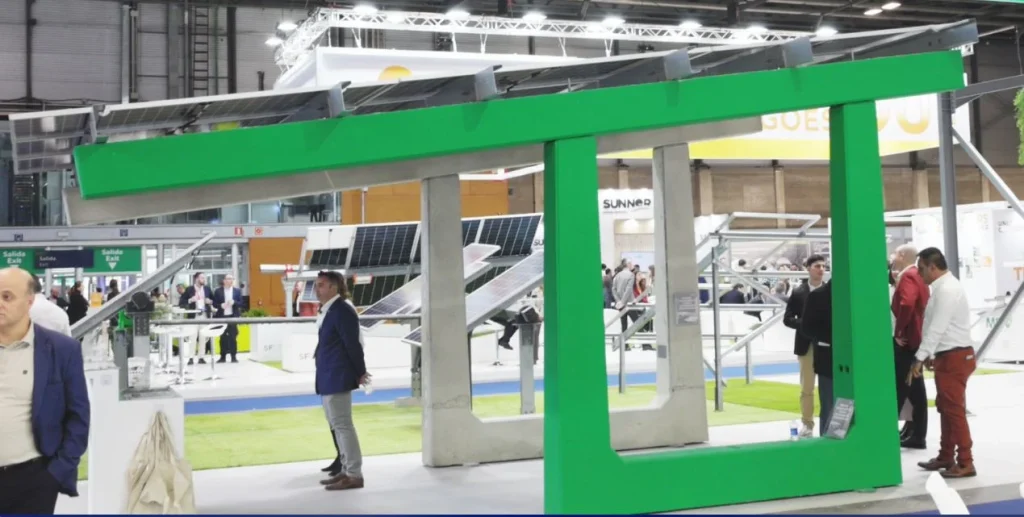

Photovoltaic self-consumption has been consolidated as a strategic solution for
the industrial sector, not only because of their direct impact on cost reduction
energy efficiency, but also for their contribution to sustainability and the improvement of the
business competitiveness. The correct implementation of these systems requires
a technical approach that considers both energy production and energy efficiency.
particularities of industrial consumption.

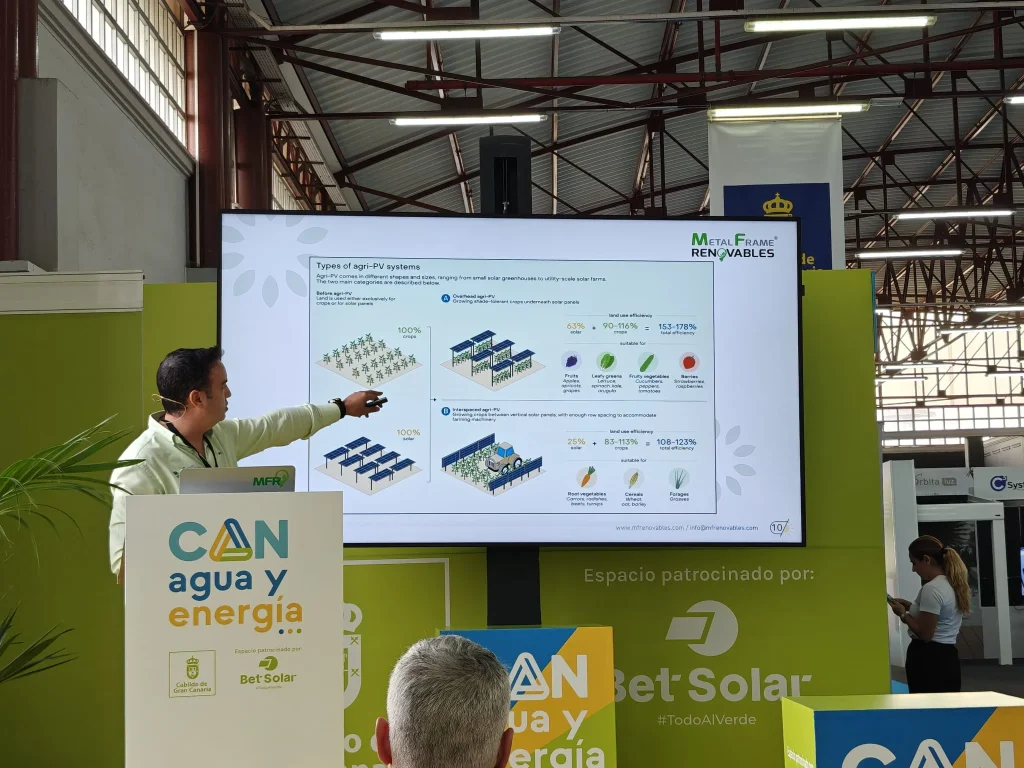
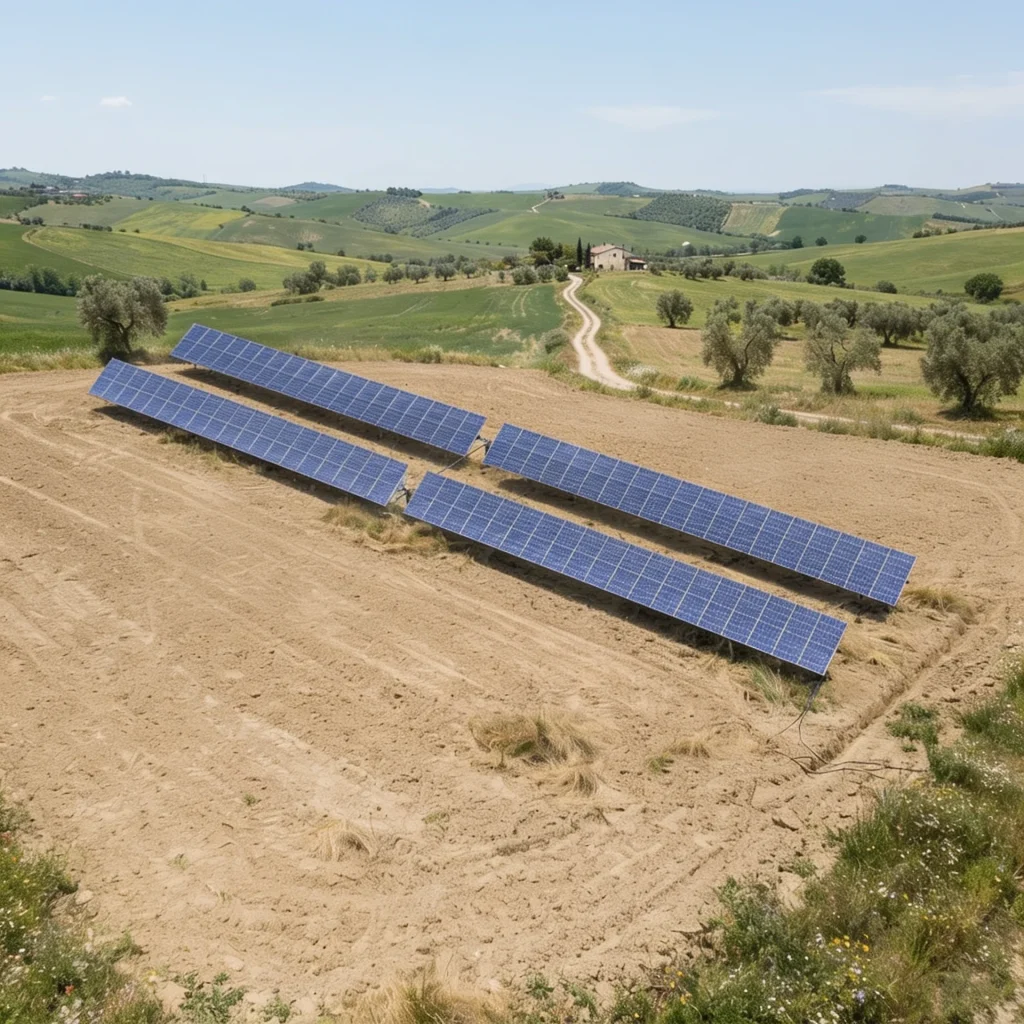
Agrovoltaics involves the combined use of the same area of land for both
for agricultural production, as the main use, such as for the production of
electricity through a photovoltaic system, as a secondary use. Unlike
Conventional photovoltaic installations, this system is designed to
coexist with crops, providing mutual benefits for both production
agricultural use and for renewable energy generation.
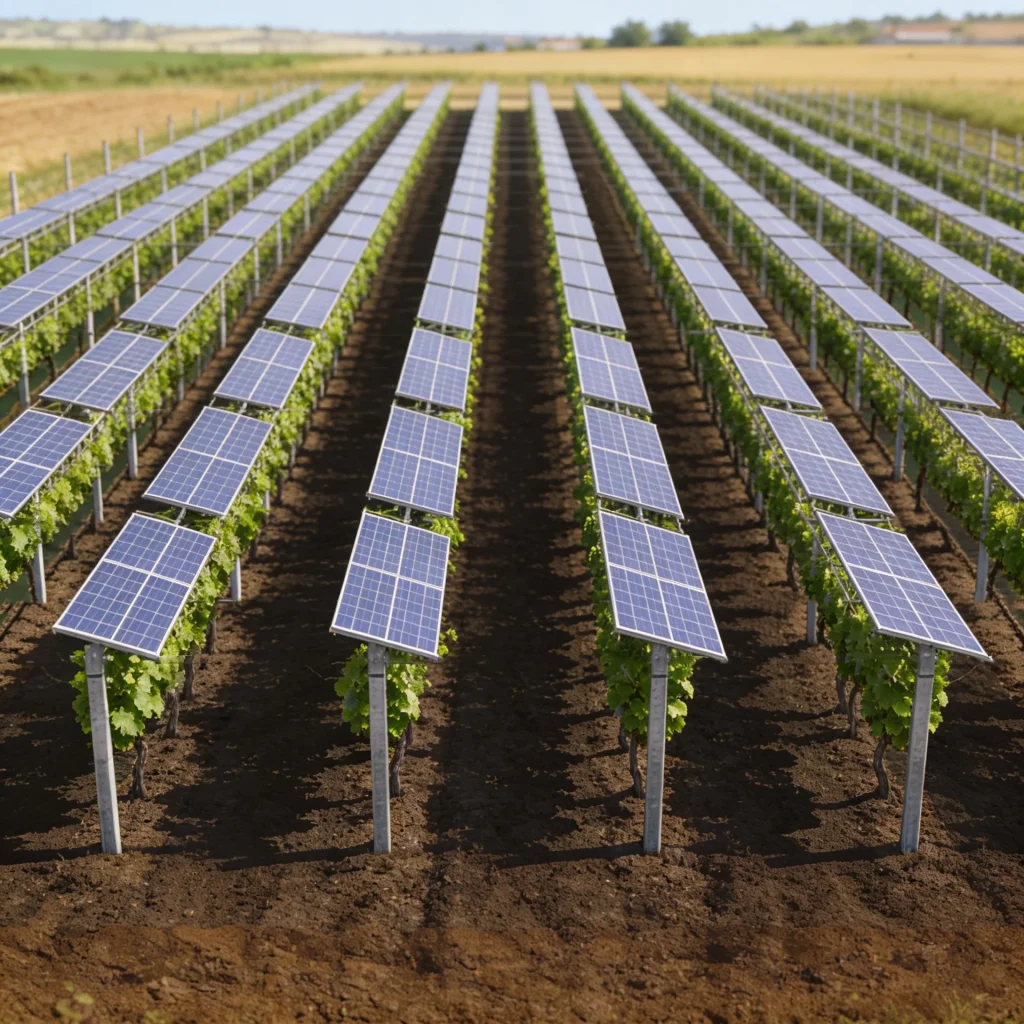
The photovoltaic modules are installed at a height and orientation that allow for
sufficient light to allow crops to grow properly.
In addition, some systems may include solar trackers that optimise the
energy capture without compromising plant photosynthesis.
Industrial facilities have consumption profiles that differ from one country to another.
considerably from the residential or commercial sector. It is common to find:
- High start-up peaks due to the use of electric motors in pumps,
compressors, fans and heavy machinery.
- Stable base consumption, associated with lighting systems, air-conditioning, etc.
and automated processes that require constant energy.
- Critical need for continuity, since any failure or interruption of the
can result in significant financial penalties and
production stops.
These factors make it necessary to design installations that are precisely adjusted to the
actual energy performance of the industrial plant.
One of the most relevant decisions in the design of a self-consumption system
industrial is the choice of the support structure for the solar panels. On
In this regard, there are two main typologies:
1. Fixed structures
- They are simple, low-maintenance and usually more economical to operate.
initial installation.
- They offer a stable energy production, but limited by the orientation and
fixed inclination.
2. Solar tracking systems (1V Tracker)
- They dynamically adjust the position of the panels to maximize the
solar gain throughout the day.
- They generate a flatter production curve, which is key for
industrial processes operating in several shifts.
- They reduce surpluses and discharge to the network, optimizing self-consumption and
return on investment.
- They are particularly efficient in industries with variable energy consumption or
distributed in different time slots.
In today's industrial context, where energy efficiency must go hand-in-hand with
operational reliability, solar trackers are progressively gaining the upper hand over
fixed structures. Its ability to adapt to consumption profiles
and improve solar utilization throughout the day makes them
a highly profitable option.
In addition, they make it possible to better cover consumption peaks at critical times,
minimizing dependence on the grid and avoiding cost overruns resulting from
penalties for punctual demands.


Photovoltaic self-consumption in industrial environments is not just a simple decision
energy, but rather a comprehensive strategy for process optimization, sustainability, and
saving. The choice between fixed structure or solar tracker must be made depending on the
load profile, plant operation and the customer's energy objectives.
At Metal Frame Renovables, we accompany our industrial customers with
customized structural solutions - either fixed or single-axis solar trackers - are available.
designed to maximize performance, adapt to actual consumption, and ensure the highest
operational continuity required by the industry.
The Administration department acts as a connection point between all the
areas. Being the link that manages the documentation of each movement -from
orders from production orders to stock control or the presentation of results - is
becomes the backbone that makes it possible to comply with the standards required by
quality audits.
This would not be possible without a active collaboration of all teams. The
achieving quality objectives is not an isolated task of the quality assurance department.
Quality, but a collective commitment. And it is precisely the position
interdepartmental administration, which allows all departments to be involved in the
align with these goals.
This collaboration is made possible thanks to a collaborative work model, where the
continuous improvement, environmental responsibility and information security
are part of our corporate DNA.

In a sector such as the renewable energy sector, where competition is fierce and
growing, certifications represent a real competitive advantage. They are the
tangible evidence of the commitment of all personnel, from the operators in
warehouse to the management. For this reason, at Metal Frame Renovables we feel that every
certification is a shared achievement, a source of collective pride.
These certifications are a recognition of the rigorous work that we carry out in
all levels of the organization and consolidate our position as a benchmark in the
design, manufacture and supply of structural solutions for the photovoltaic sector.
The role of the logistics is equally crucial. It is the last link in the process
productive, where any mismatch can compromise the customer experience.
Therefore, the demands are the highest. The precise delivery of materials and the
Coordination with on-site installations must be meticulous in order to avoid delays.
and ensure customer satisfaction.
But our commitment goes beyond operational efficiency. We are a
environmentally conscious company of our business. For this reason, we apply
criteria for optimizing the use of trucks, maximizing the loading capacity and
by outlining routes to reduce carbon emissions as much as possible. This
strategy not only lowers costs, but also reinforces our accountability to our customers.
the environment.
In conclusion, at Metal Frame Renovables, we firmly believe that the success of a
is not only measured by what it produces, but also by how it produces it. And that
includes maintaining impeccable administrative processes, quality standards
and logistics that think about the customer and the planet. Because when
all this aligns, the result is a solid, competitive and, above all,
consistent with its values.
Te informamos de que los datos que nos facilites serán tratados por METAL FRAME RENOVABLES S.L. para atender tu consulta o solicitud. La base legal es tu consentimiento. No se cederán datos a terceros, salvo obligación legal o proveedores necesarios para la prestación del servicio. Puedes ejercer tus derechos escribiendo a info@mfrenovables.com. Más información en nuestra Política de Privacidad.