

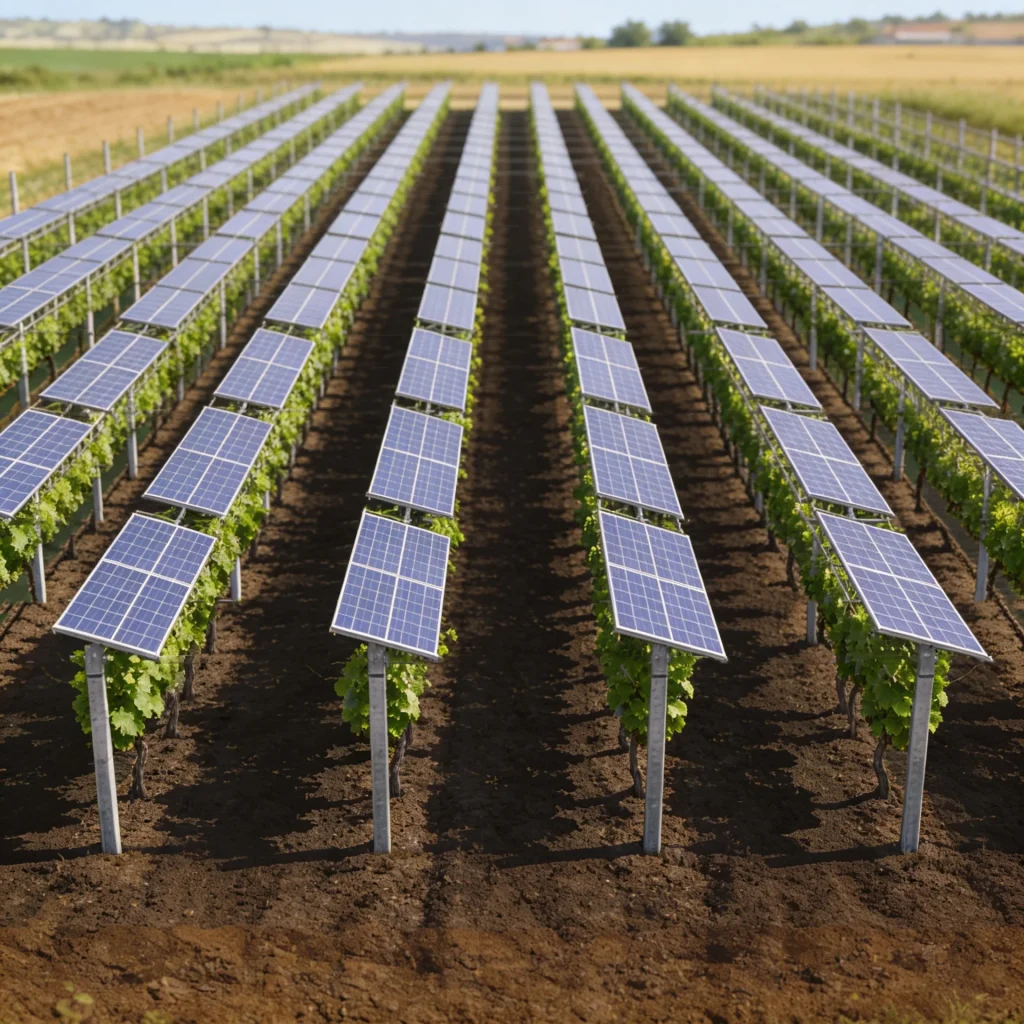


Agrovoltaics involves the combined use of the same area of land for both
for agricultural production, as the main use, such as for the production of
electricity through a photovoltaic system, as a secondary use. Unlike
Conventional photovoltaic installations, this system is designed to
coexist with crops, providing mutual benefits for both production
agricultural use and for renewable energy generation.
The photovoltaic modules are installed at a height and orientation that allow for
sufficient light to allow crops to grow properly.
In addition, some systems may include solar trackers that optimise the
energy capture without compromising plant photosynthesis.
At Metal Frame Renovables, we believe that economic progress must go hand in hand with sustainability and social well-being. That is why we align our operations and business philosophy with the Sustainable Development Goals (SDGs) established by the United Nations (UN). These 17 goals act as a global roadmap to eradicate poverty, protect the planet, and ensure prosperity for all.
Below, we highlight the key SDGs that we meet thanks to our actions and daily commitment:
SDG 7: Affordable and Clean Energy
SDG 7: Affordable and Clean Energy Our raison d'être is directly linked to this goal. We design, manufacture and supply structures for photovoltaic modules, promoting the transition to renewable energy. With more than 2.7 GW of photovoltaic projects completed, we contribute significantly to increasing access to clean and sustainable energy in various countries. In addition, our initiatives also help reduce energy inequalities by providing accessible and efficient solutions in disadvantaged communities, indirectly supporting the SDG 10.
SDG 5: Gender Equality
At Metal Frame Renovables, we promote an inclusive and equitable work environment. We currently have women in key positions within the company, demonstrating our commitment to gender equality and female empowerment.
SDG 8: Decent Work and Economic Growth
Metal Frame Renovables generates direct and indirect employment in the renewable energy industry, with more than 40 specialised employees and hundreds of indirect jobs created through our projects. Our activity drives economic growth in the local communities where we operate, promoting fair and safe working conditions. In addition, the promotion of local employment indirectly contributes to SDG 1 by helping to reduce poverty through the generation of sustainable income for families.

SDG 9: Industry, Innovation and Infrastructure
At Metal Frame Renovables, we are committed to advanced technological solutions and sustainable materials. Our experience in engineering and design guarantees durable and efficient structures that contribute to the development of sustainable infrastructure. In addition, we are pioneers in Spain in the development of 100% nationally manufactured solar trackers, promoting local innovation and competitiveness.
SDG 12: Responsible Consumption and Production
We work under strict international standards such as Eurocodes and ISO standards to ensure the sustainability of our products. The selection of materials such as recyclable aluminium and treated steels to minimise corrosion reinforces our commitment to the circular economy and resource efficiency.
SDG 13: Climate Action
Our contribution to the increase in photovoltaic plants helps reduce global greenhouse gas emissions. In addition, our participation in agrovoltaic projects planned for 2025 combines clean energy with sustainable agricultural practices, promoting climate change mitigation and adaptation to its effects. This approach also contributes to SDG 11 by promoting sustainable cities and communities through the integration of renewable energies in urban areas, improving quality of life and reducing dependence on polluting energy sources.
Growing concern about sustainability and climate change has led to
many countries to seek innovative ways to optimise land use and
diversify energy sources. In this context, agrovoltaics emerges as a
ideal solution, as it not only contributes to the decarbonisation of the energy system
and reducing carbon emissions, but also allows for more
efficient use of soil, helping to strengthen food security without compromising
efficient use of land, helping to strengthen food security without compromising renewable energy production.
In countries such as Japan, Italy, Germany, and France, this technology is advancing.
rapidly, while in Spain, the potential is enormous due to the large
extensive agricultural land and high levels of solar radiation, but this does not end
to take off because we do not have a definition or regulation of the advance
of this technology.
Agrovoltaics is not just a passing trend, it is a technology that is here to stay.
to stay and evolve. Its ability to combine food production
and energy makes it a key element in tackling the challenges of climate change.
and food security. In future publications, we will explore this topic further.
details about how it works, its practical applications and its impact on
rural communities.

Agrovoltaics is not only a technological solution, but also a comprehensive model for addressing the challenges of climate change and promoting sustainable development in rural areas. Its ability to reduce emissions, conserve natural resources and improve the rural economy makes it a key tool in the fight against climate change. With adequate support in public policy and financing, its adoption can make a significant difference globally.
In future publications, we will explore the technological innovations that are driving its development and the investment opportunities for smallholder farmers.
SDG 15: Life on Land
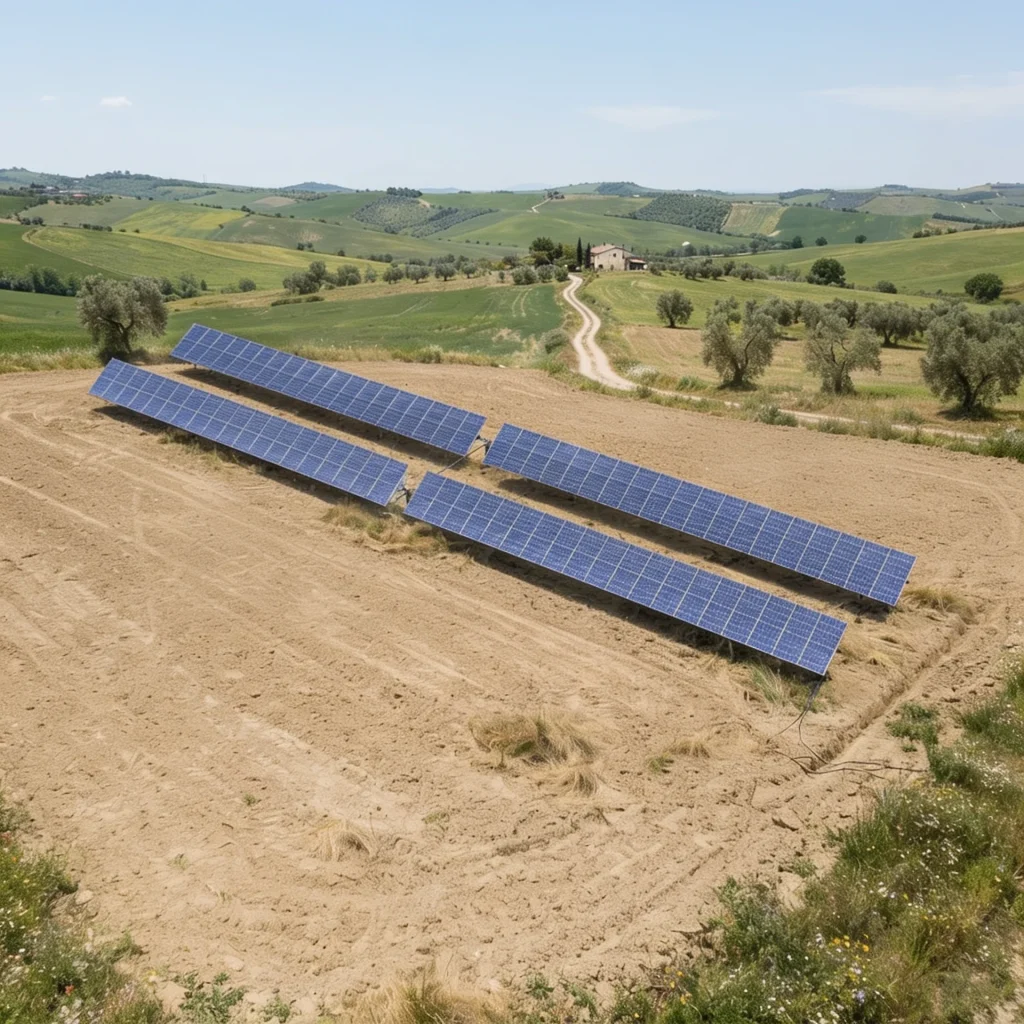
We consider environmental impact in our operations. We design structures for agrovoltaic projects that combine food cultivation with solar energy generation, minimising disruption to ecosystems and promoting biodiversity. We also assess whether our activities have any impact on nearby water bodies, aligning ourselves with the SDG 14 by ensuring that our operations respect aquatic ecosystems and contribute to their preservation.
We consider the environmental impact of our operations. We design structures for agrovoltaic projects that allow food cultivation to be combined with solar energy generation, minimising disruption to ecosystems and promoting biodiversity.
Our Global Impact
With more than 18,400 photovoltaic projects completed in different countries, Metal Frame Renovables reaffirms its commitment to a sustainable future. Every project we carry out brings us closer to a world where renewable energy is the norm and not the exception.
Our Global Impact
Many of our projects have had a positive impact on the improvement of educational and health conditions in the beneficiary communities, thus also contributing to the fulfillment of the SDG 4 and 3Metal Frame Renovables reaffirms its commitment to a sustainable future. Every project we carry out brings us closer to a world where renewable energy is the norm rather than the exception.
Ongoing Commitment
From our headquarters in Extremadura, we work with a business model that prioritises sustainability and innovation. We will continue to adapt to global challenges to ensure that our solutions are not only efficient, but also responsible towards the planet and future generations.
Together for a more sustainable tomorrow!

Te informamos de que los datos que nos facilites serán tratados por METAL FRAME RENOVABLES S.L. para atender tu consulta o solicitud. La base legal es tu consentimiento. No se cederán datos a terceros, salvo obligación legal o proveedores necesarios para la prestación del servicio. Puedes ejercer tus derechos escribiendo a info@mfrenovables.com. Más información en nuestra Política de Privacidad.