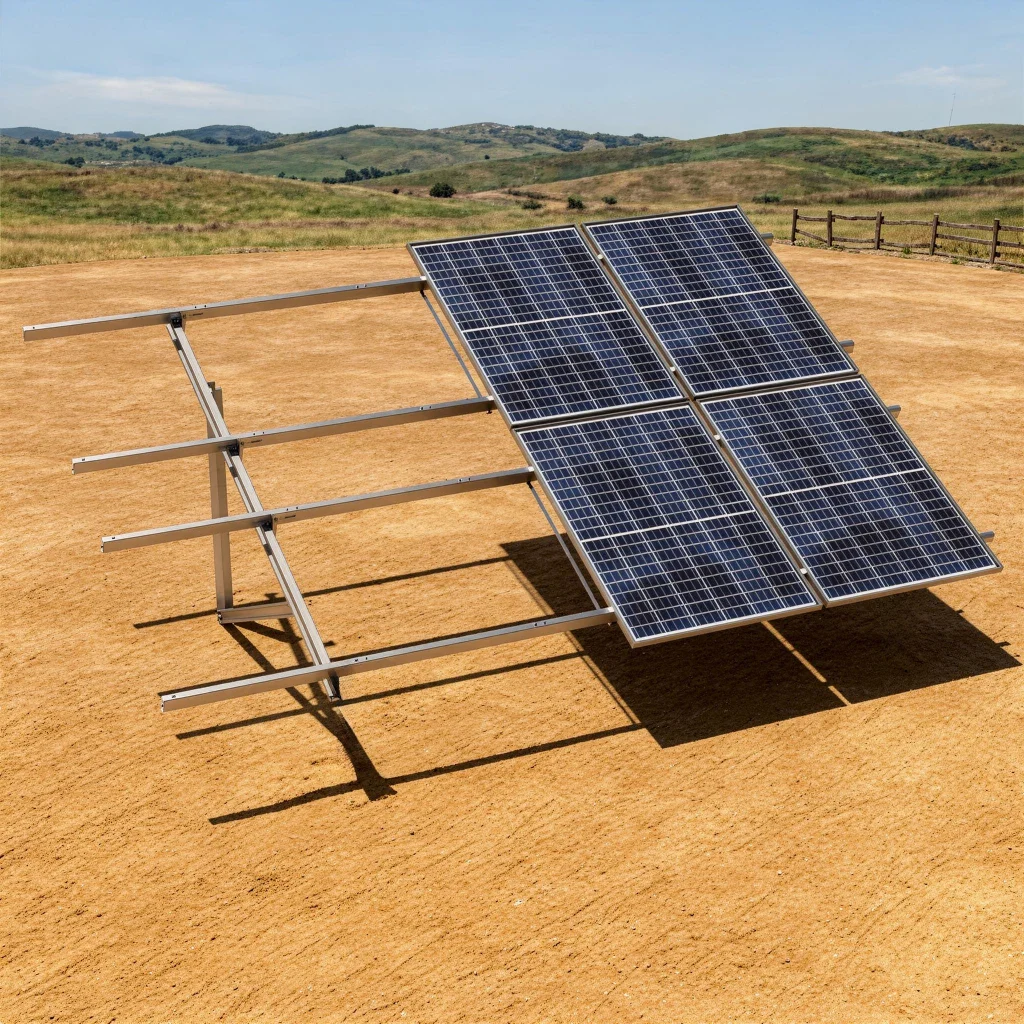
Fixed photovoltaic structures

Our fixed ground structures adapt to any model and layout of modules and terrain typology. We offer versatile and reliable Monopost and Bipost solutions to optimize solar energy generation in projects of different scales.

MFR

Fixed Structures for Photovoltaic Modules

These structures are designed to facilitate fast and safe assembly, with foundation options using direct pile driving or concrete footings, allowing configurations in two modules vertically or three modules horizontally, adapting to the needs of the project.

Monoposte

Fixed structure
Monoposte

  • Desing: It is based on a single central pole that supports the photovoltaic modules. This design reduces the amount of material used, reducing costs and simplifying installation.
  • Common uses: Ideal for flat terrain with soil conditions that allow for proper fixation of the single pole.
  • Advantages:
    • Less visual impact and space occupation.
    • Quick and efficient installation.
    • Less foundation work required.
  • Materials: Made of galvanised steel and corrosion-resistant hardware (AISI 304), ensuring durability even in adverse conditions.
  • Capacities: Allows configurations in 2V (two modules vertically) or 3H (three horizontal modules), adapting to the needs of the project.

Monoposte

Monoposte

Fixed structure
Monoposte

  • Desing: It is based on a single central pole that supports the photovoltaic modules. This design reduces the amount of material used, reducing costs and simplifying installation.
  • Common uses: Ideal for flat terrain with soil conditions that allow for proper fixation of the single pole.
  • Advantages:
    • Less visual impact and space occupation.
    • Quick and efficient installation.
    • Less foundation work required.
  • Materials: Made of galvanised steel and corrosion-resistant hardware (AISI 304), ensuring durability even in adverse conditions.
  • Capacities: Allows configurations in 2V (two modules vertically) or 3H (three horizontal modules), adapting to the needs of the project.

01

MONOPOST 2V-C

MFR

Vertical Cemented

02

MONOPOST 2V-H

MFR

Vertical squat

03

MONOPOST 3H-C

MFR

Horizontal Cemented

04

MONOPOST 3H-H

Horizontal squat

Biposte

Fixed structure
Biposte

  • Desing: This structure has two support posts, evenly distributing the loads of the modules.
  • Common uses: Suitable for terrain with challenging characteristics or where greater structural stability is required.
  • Advantages:
    • Excellent resistance to adverse weather conditions, such as wind or snow.
    • Increased structural rigidity, ideal for large-scale plants.
    • Flexibility in modular configurations (2V or 3H).
  • Materials: Like the monopost, they are manufactured from high quality materials such as galvanised steel and aluminium in accordance with international quality and sustainability standards.

Monoposte

Biposte

Fixed structure
Biposte

  • Desing: This structure has two support posts, evenly distributing the loads of the modules.
  • Common uses: Suitable for terrain with challenging characteristics or where greater structural stability is required.
  • Advantages:
    • Excellent resistance to adverse weather conditions, such as wind or snow.
    • Increased structural rigidity, ideal for large-scale plants.
    • Flexibility in modular configurations (2V or 3H).
  • Materials: Like the monopost, they are manufactured from high quality materials such as galvanised steel and aluminium in accordance with international quality and sustainability standards.

05

BIPOSTE 2V-C

MFR

Vertical Cemented

06

BIPOSTE 2V-H

MFR

Vertical squat

07

BIPOSTE 3V-C

Vertical Cemented

Common features of both structures

Regulations

They comply with international standards EN 1090-1 and Eurocode for steel structures.

Warranty

The materials offer warranties of up to 30 years against corrosion, depending on the type of material used (hot-dip galvanised or ZM310).

Adaptability

They are compatible with different inclinations and modular layouts, maximising energy efficiency depending on the project location.

Installation

Designed to facilitate fast and safe assembly, with options for direct pile-driven foundations or concrete footings.

Installation Considerations

Orientation and tilt

Determining the optimal position to maximize solar capture according to geographic location.

Land conditions

Evaluate the resistance and characteristics of the surface to ensure safe attachment.

Climatic conditions

Consider factors such as wind, snow, or corrosion to select suitable materials and designs.

Share this:

Before contacting via WhatsApp

We inform you that the data you provide to us will be processed by METAL FRAME RENOVABLES S.L. to answer your query or request. The legal basis is your consent. Data will not be disclosed to third parties, except for legal obligations or suppliers necessary for the provision of the service. You can exercise your rights by writing to info@mfrenovables.com. More information in our Privacy Policy.