

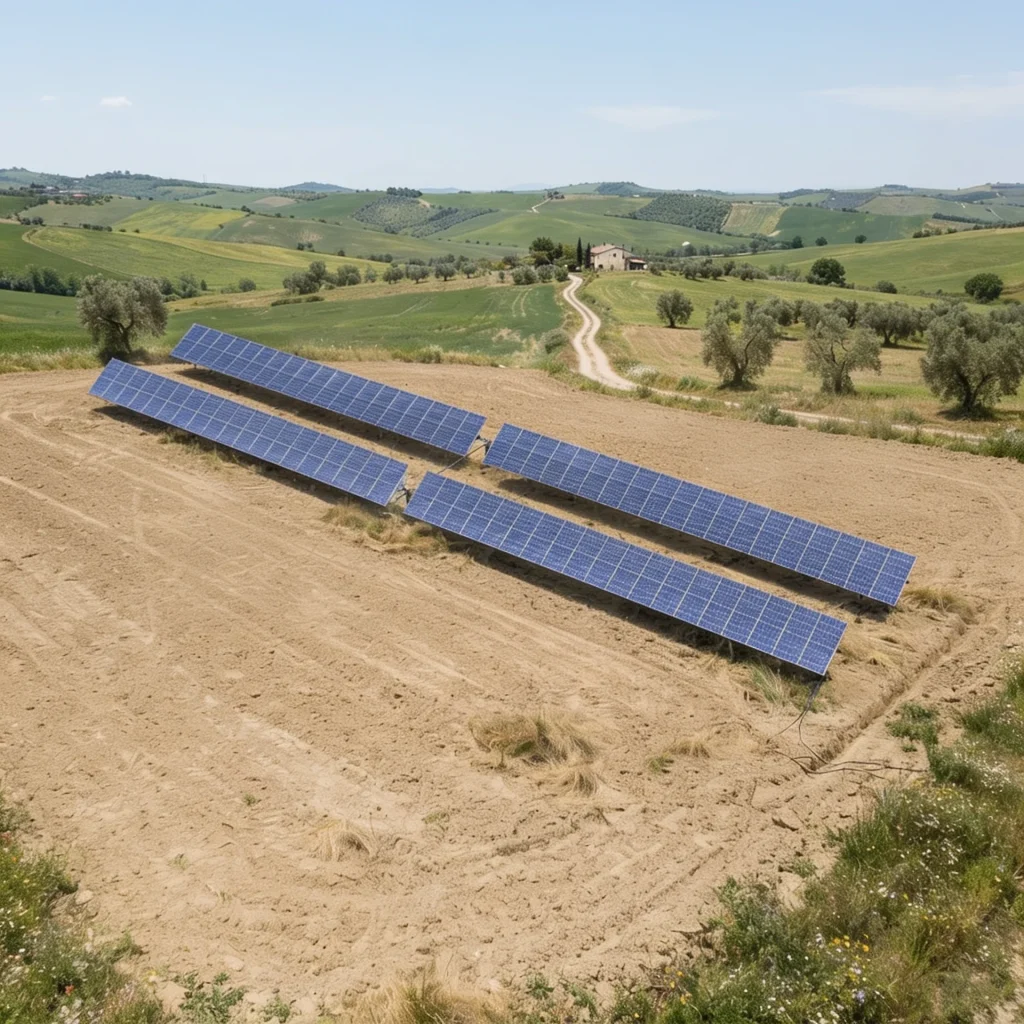

Agrovoltaics is emerging as a key technology for the transition to a sustainable development model. However, like any innovative solution, it faces certain technical, economic and environmental challenges that must be addressed to ensure its long-term success. In this article, we will explore the five main challenges of agrovoltaics and strategies to overcome them.

The first major challenge for the implementation of agrovoltaic projects is the cost high initial, resulting from the installation of photovoltaic modules, elevated structures and tracking systems. This can be a significant barrier for small farmers or rural communities with limited resources.
How to overcome it: Take advantage of government, European or regional funding programmes aimed at renewable energy projects.
Business models shared: Implement cooperative systems where several farmers can share costs and profits.
Power purchase agreements (PPAs): Allow third parties to finance the installation in exchange for a long-term energy supply contract.
One of the main fears associated with agrovoltaics is the possible impact negative impact on crop growth due to reduced direct sunlight. Although some crops benefit from partial shade, others may see reduced yields if the system is not designed correctly.
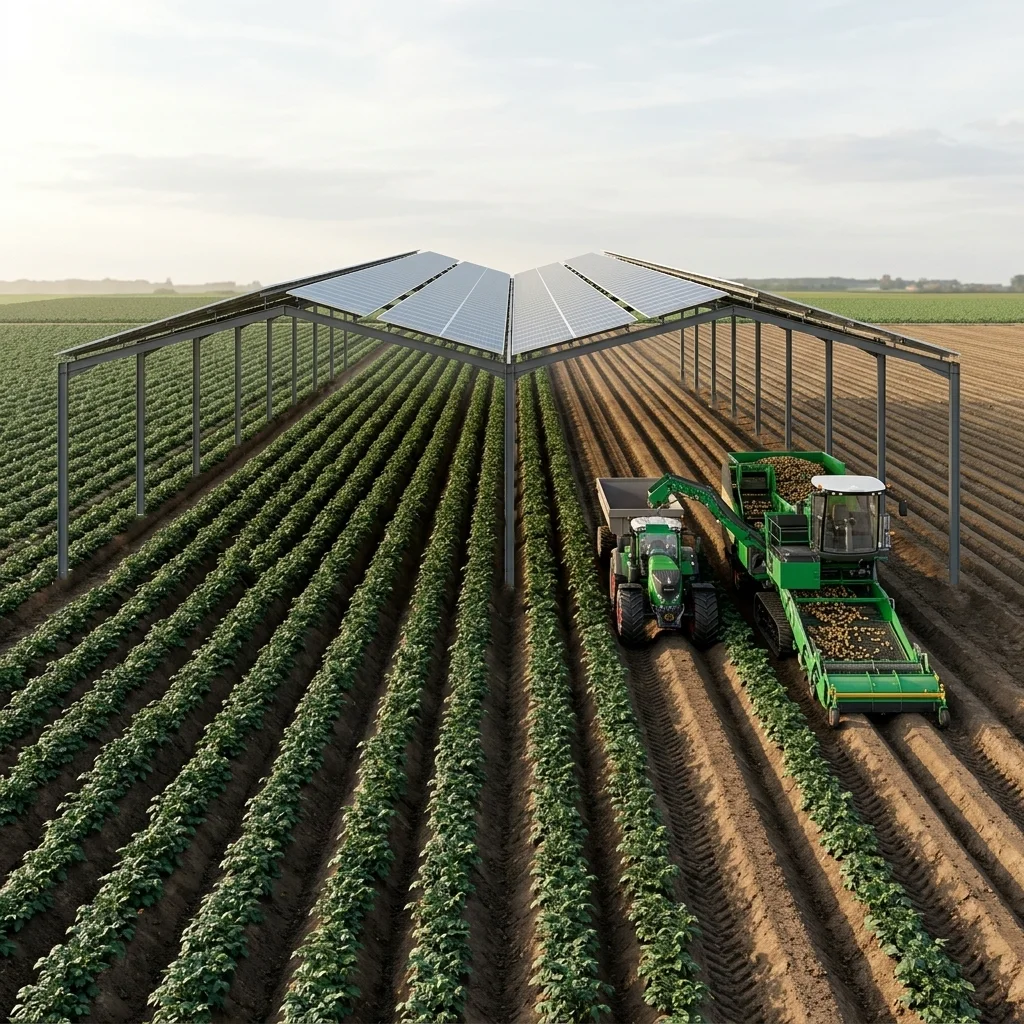
Optimised design: Ensure that the photovoltaic modules are positioned at the desired height and with sufficient space between rows to allow for even light distribution.
Choosing suitable crops: Some crops, such as vegetables, vineyards and certain aromatic plants, have shown positive results in agrovoltaic systems.
Saturation curve study: Have prior knowledge of the light saturation point of the selected crop to determine whether the structure design allows the necessary amount of light to pass through.
Semi-transparent or adjustable panels: Advanced technologies that allow some light to pass through or adjust its angle according to the needs of the crop.
In various pilot projects, the effects of shade levels on specific crops are being investigated to determine optimal configurations.
Agrovoltaic systems are more complex than conventional solar installations due to the need to integrate solar panels with agricultural activity. This includes the design of elevated structures, irrigation systems and adapted machinery.


Collaboration with experts: Working with agricultural engineers and solar energy specialists to design customised systems.
Monitoring technologies: Implement light, humidity, and temperature sensors to optimise crop yield and energy production.
Preventive maintenance: Establish regular inspection and maintenance protocols to prevent technical problems.
In some countries, the implementation of agrovoltaic projects may be hindered by
hampered by strict regulations and lengthy administrative processes. The
Obtaining permits can be a tedious process, especially on land that is not zoned for residential use.
classified as agricultural.
Legal advice: Have experts in agricultural and energy legislation to guide the permitting process.
Simplification of regulations: Advocate for regulatory changes that favour sustainable projects.
Local initiatives: Collaborate with local communities and authorities to expedite project approvals.
Some regions in Europe have begun to relax their regulations to encourage agrovoltaic projects, recognising their importance in the energy transition.
Lack of knowledge about the benefits of agrovoltaics can lead to rejection by local communities or farmers, who may perceive it as a threat to their traditional activity.
Information and education campaigns: Organise workshops, visits to existing projects and seminars to demonstrate the benefits.
Community participation: Engage farmers and residents
local businesses from the start of the project so that they feel part of the process.
Success stories: Show real examples of projects that have improved both agricultural production and farmers' incomes.
In regions such as Japan and Germany, where agrivoltaics is more developed, social acceptance has been key to its expansion.

Conclusion: Overcoming challenges for a sustainable future
Although agrovoltaics faces significant challenges, it also offers viable and constantly evolving solutions. With adequate support in terms of financing, technology and regulation, this technology has the potential to become a key component of agricultural and energy sustainability. Overcoming these challenges will not only benefit farmers, but also contribute to a more sustainable and resilient future.

Te informamos de que los datos que nos facilites serán tratados por METAL FRAME RENOVABLES S.L. para atender tu consulta o solicitud. La base legal es tu consentimiento. No se cederán datos a terceros, salvo obligación legal o proveedores necesarios para la prestación del servicio. Puedes ejercer tus derechos escribiendo a info@mfrenovables.com. Más información en nuestra Política de Privacidad.